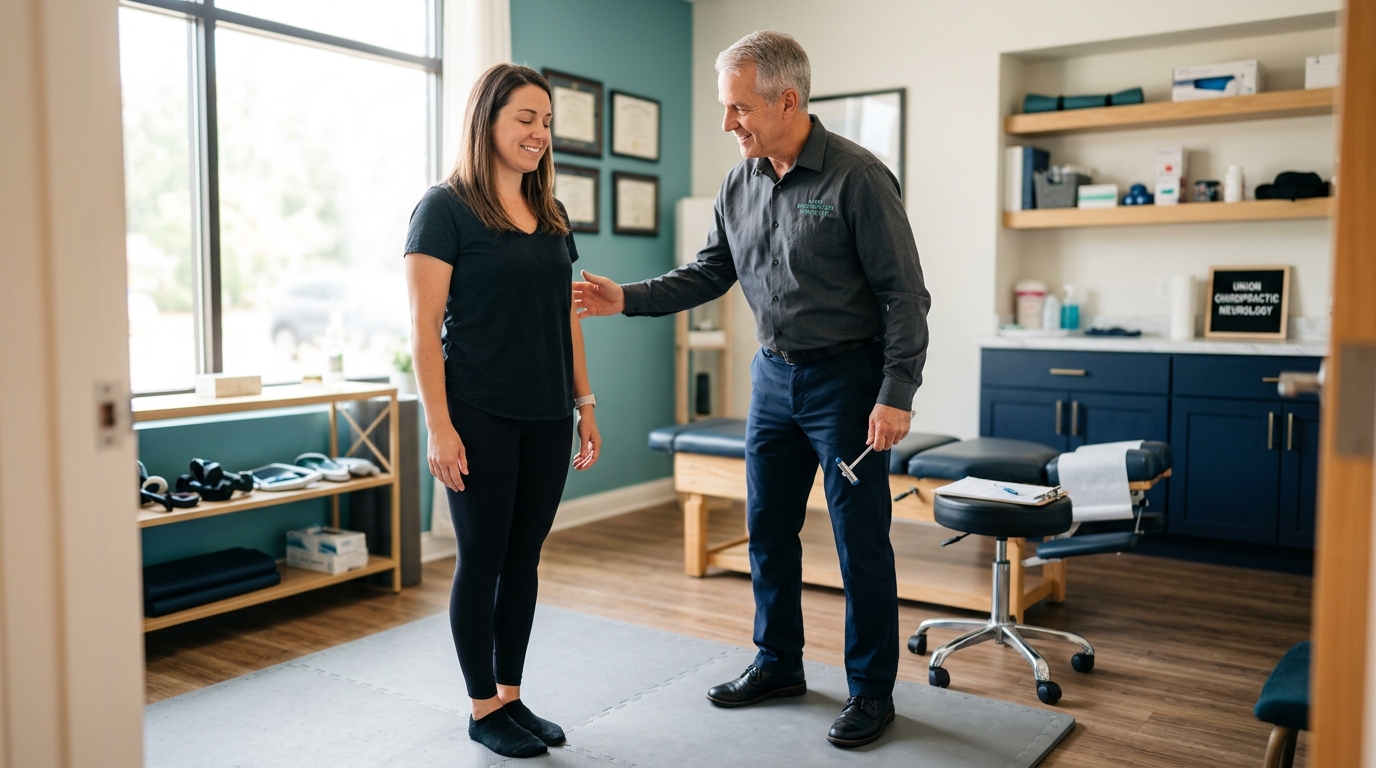
Neurologic Examinations in Monroe, NC: What Patients Can Expect
A neurologic examination is a structured, noninvasive way to learn more about how the brain, nerves, muscles, joints, and sensory systems are working together. At Union Chiropractic Neurology in Monroe, North Carolina, we use this information to better understand functional concerns and create individualized care plans focused on rehabilitation, nervous system function, and improved day-to-day movement.
Whether you are dealing with dizziness, recurring headaches, neck or back discomfort, sciatica, changes in balance, or recovery after an crash, concussion or sports injury, an examination can provide useful insight into which systems may need attention. It is not about a one-size-fits-all approach—it is about identifying relevant functional patterns and determining appropriate next steps.
Starting With Your Health History and Goals
A neurologic examination often begins with a conversation. We may ask about your symptoms, when they began, what makes them better or worse, previous injuries, Health history, daily activities, and personal goals. For example, someone seeking help with vertigo may describe when dizziness occurs, while a person recovering from a sports injury may be more focused on returning to movement without pain and with confidence.
This discussion helps our team understand the full picture. At Union Chiropractic Neurology, Dr. Louis Kerr and our team consider how concerns may affect work, family life, exercise, sleep, and overall wellness care IF that interests you—not just one painful area.
Assessing Balance, Coordination, and Gait
Balance depends on coordinated communication among the brain, inner ear, vision, muscles, joints, and sensory nerves. During an exam, we may observe how you stand, shift your weight, walk, turn, or maintain stability in different positions.
Coordination testing may include simple movements involving your arms, hands, or legs. These observations can help us evaluate how smoothly and accurately the nervous system is guiding movement. Gait assessment looks at the way you walk, including your stride, posture, rhythm, and ability to transition or change direction.
These assessments may be especially relevant for people experiencing vertigo, unsteadiness, concussion-related symptoms, or changes in mobility. Findings can help guide functional neurology and neurorehabilitation strategies when appropriate.
Checking Eye Movements and Visual Processing
Eye movements offer important information about nervous system function. We may observe how your eyes track a moving target, shift focus between targets, or work together while you look in different directions. These tasks are typically simple, but they can reveal useful information about coordination between visual input and the brain.
For some people, visual and eye-movement testing may be relevant when discussing dizziness, motion sensitivity, headache or migraine concerns, or concussion recovery. It is one component of a broader neurologic examination, not a standalone answer to every symptom.
Testing Reflexes, Sensation, and Nervous System Communication
Reflex testing evaluates automatic responses that involve communication between nerves, the spinal cord, and muscles. Sensory testing may involve checking how you perceive light touch, vibration, temperature, or position. These assessments can help identify differences in how the nervous system receives and processes information from various areas of the body.
We may also assess strength, muscle tone, and the ability to recognize where a joint or limb is positioned without looking. Together, these findings help create a clearer view of how the neuromusculoskeletal system is functioning.
Evaluating Joint Function and Movement Quality
Joint function can influence comfort, mobility, coordination, and movement patterns. During an examination, we may assess range of motion, movement quality, stability, and how different regions of the body work together during everyday tasks.
For patients with neck pain, back pain, sciatica, or sports-related concerns, this portion of the assessment may help identify areas that could benefit from rehabilitative joint therapy, movement-based care, or other noninvasive options. Our goal is to support functional rehabilitation in a way that reflects your specific needs, health history, and tolerance.
How the Findings Guide Individualized Care
A neurologic examination is not intended to replace emergency or specialty medical care when it is needed. Instead, it can help determine whether chiropractic neurology and supportive rehabilitation services may be appropriate as part of your care plan. If findings suggest that another provider or urgent evaluation is needed, appropriate referral can be an important part of the process.
For qualifying patients, recommendations may include neurorehabilitation exercises, rehabilitative joint therapy, acupuncture, laser therapy, taping or bracing, and other individualized noninvasive healthcare options. The recommended approach depends on your examination findings, goals, and response to care. We focus on helping patients work toward better function and natural pain relief without promising a specific result.
Support for Monroe, Union County, and Indian Trail Patients
Union Chiropractic Neurology serves Monroe, Union County, and Indian Trail patients looking for a thoughtful, evidence-based approach to chiropractic neurology. Whether your goal is to address persistent movement concerns, support sports injury recovery, explore options for headache and migraine relief, or maintain wellness, we begin by listening and evaluating how your body and nervous system are functioning.
If you would like to learn whether a neurologic examination may be appropriate for your concerns, Call (704) 776-8667 to schedule an evaluation.