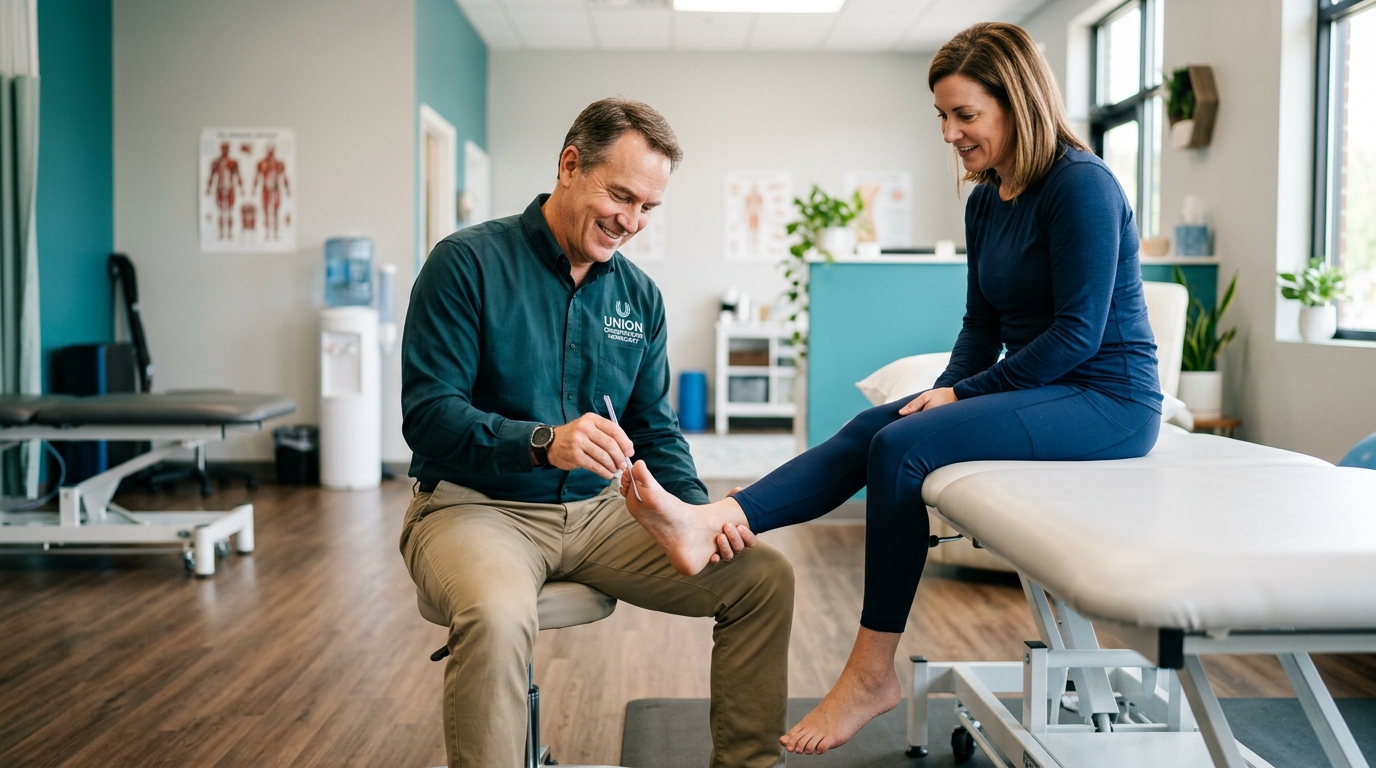
Neuropathy Symptoms and Function: When Tingling, Numbness, or Burning Deserves Attention
Quick Summary: Tingling, numbness, burning sensations, reduced feeling in the feet, balance changes, and coordination concerns can all affect daily comfort and confidence. These symptoms may have many possible causes, which is why a thorough evaluation of nerve function, movement, balance, circulation considerations, and overall neuromusculoskeletal function can be valuable. Union Chiropractic Neurology provides evidence-based, noninvasive care and functional rehabilitation to help patients in Monroe, Union County, and Indian Trail better understand their functional needs.
Common Symptoms That May Be Associated With Neuropathy
Neuropathy-related symptoms can feel different from person to person. Some people describe a persistent “pins and needles” sensation, while others notice burning, sensitivity, or areas that seem less responsive than usual. Symptoms may be occasional at first or may become more noticeable during walking, standing, exercise, or at night.
Common concerns include:
- Tingling or prickling in the hands, feet, fingers, or toes
- Numbness or reduced foot sensation
- Burning, aching, or unusual sensitivity
- Feeling unsteady while walking or standing
- Changes in balance, especially on uneven surfaces or in low light
- Changes in coordination, such as trouble placing the feet accurately or handling small objects
- Muscle weakness, fatigue, or altered movement patterns
These experiences should not be ignored or self-diagnosed. They can be associated with a range of health factors, and appropriate medical evaluation is important—especially if symptoms are sudden, worsening, one-sided, or accompanied by significant weakness, severe pain, speech changes, vision changes, or other new neurologic concerns.
Why a Functional Neurology Evaluation Matters
The nervous system is constantly communicating with the muscles, joints, eyes, inner ear, and sensory receptors in the feet and hands. When that communication is not working efficiently, the result may be more than discomfort. It can influence how someone walks, reacts to changes in terrain, maintains posture, and performs everyday tasks.
At Union Chiropractic Neurology, a neurologic examination can help identify functional patterns that may be contributing to symptoms or reduced performance. This may include reviewing sensory responses, reflexes, coordination, gait, posture, eye movements, balance strategies, and how the body responds to movement.
The goal is not to make broad promises or replace medical care. Instead, a detailed evaluation can help clarify what areas may need attention and whether noninvasive healthcare approaches may be appropriate as part of a coordinated care plan.
Movement Patterns and Joint Rehabilitation
When sensation changes in the feet or legs, people may unconsciously adjust how they stand, walk, climb stairs, or exercise. Over time, these compensations can place extra demand on other areas of the body and may contribute to discomfort involving the knees, hips, back, or neck.
Functional rehabilitation and joint rehabilitation may focus on improving movement quality, strength, stability, and body awareness. For some patients, carefully selected exercises and progressive training can support safer movement and greater confidence with daily activities. Recommendations should always be individualized based on a patient’s health history, examination findings, and tolerance.
Balance and Coordination Are Important Clues
Balance depends on several systems working together: vision, inner-ear input, sensory information from the feet and joints, muscle control, and nervous system communication. A change in any one of these areas can affect stability.
That is why a chiropractic neurology and functional neurology approach may consider more than a single symptom. If someone in Monroe or Union County reports feeling unsteady, catching a foot, hesitating on stairs, or avoiding activities because of a fear of falling, examining balance and coordination can provide useful information for a personalized rehabilitation plan.
Considering Circulation and Whole-Body Health
Reduced sensation, discomfort, or changes in the feet can have multiple potential contributors. Circulation considerations, metabolic health, medication effects, prior injuries, nutritional factors, and other medical conditions may all be relevant. A responsible approach includes recognizing when medical testing, physician collaboration, or referral is needed.
Noninvasive care may complement—not replace—appropriate medical diagnosis and treatment. Patients should continue working with their primary care provider and other qualified healthcare professionals for concerns such as diabetes, vascular health, medication management, or any condition that may affect nerve health.
Individualized, Noninvasive Care in Monroe
Union Chiropractic Neurology, led by Dr. Louis Kerr, offers noninvasive care designed around functional goals. Depending on examination findings and clinical appropriateness, care may include neurorehabilitation, rehabilitative joint therapy, movement-based strategies, and other supportive services intended to promote better function and quality of life.
Whether you are seeking a Monroe, NC chiropractor for concerns involving movement and balance or live elsewhere in Union County or Indian Trail, beginning with a careful neurologic examination can help establish the next appropriate step. Our team can help you understand the role of nerve function and the broader neuromusculoskeletal system in your day-to-day mobility and wellness care.
Take the Next Step
If tingling, numbness, burning sensations, reduced foot feeling, balance changes, or coordination concerns are affecting your routine, it may be time to seek a professional evaluation. Call Union Chiropractic Neurology at (704) 776-8667 to schedule an evaluation.