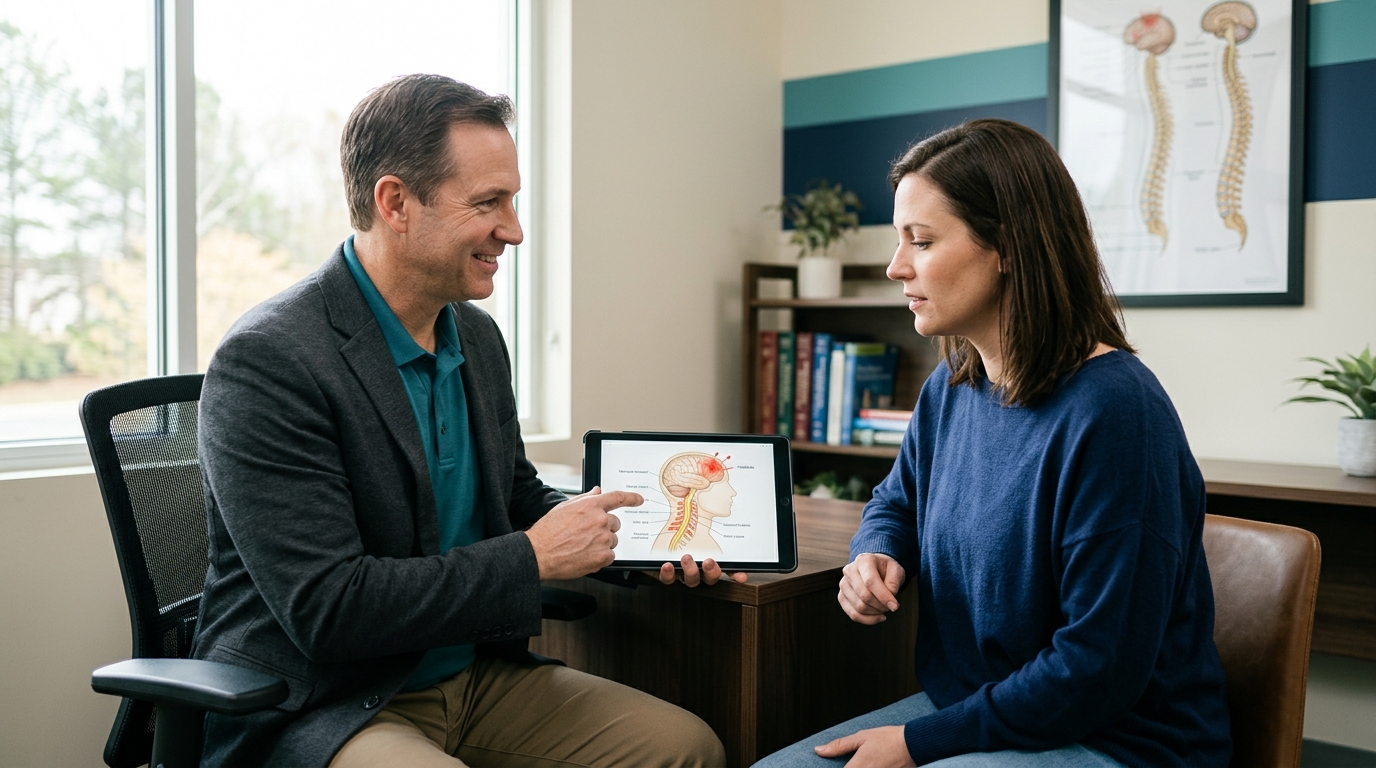
Headaches, Migraines, and Neck Function: Looking Beyond Temporary Relief
Quick Summary: Headaches and migraines can have many causes, and no two people experience them exactly the same way. For some people, factors such as neck function, visual strain, posture habits, stress, joint mobility, and movement patterns may contribute to symptoms or make them more frequent. At Union Chiropractic Neurology, we use a detailed neurologic examination and individualized, noninvasive care to identify functional contributors and support improved function.
Why Headaches Are Worth a Closer Look
Headaches are common, but “common” does not mean they should simply be ignored. Tension-type headaches, migraines, and neck-related headaches may overlap in their symptoms, including head pain, pressure, light sensitivity, nausea, neck discomfort, or difficulty concentrating. Because headaches can arise from many sources, a thoughtful evaluation is important.
At Union Chiropractic Neurology in Monroe, NC, we look beyond the location of the pain. Our approach to chiropractic neurology and functional neurology considers how the musculoskeletal and nervous systems work together. This can help us understand whether neck pain, visual demands, stress response, movement habits, or other functional patterns may be relevant to a patient’s symptoms.
Neck Function and Head Pain
The neck contains joints, muscles, sensory receptors, and nerves that communicate continuously with the brain. When neck joints are not moving well, muscles are overworking, or everyday movement patterns place repeated strain on the area, some people may experience pain that refers into the head.
This does not mean every headache comes from the neck. However, neck function can be a meaningful consideration, especially for people who notice symptoms after long periods at a desk, driving, looking down at a phone, exercising, or waking with neck stiffness. Rehabilitative joint therapy and functional rehabilitation may be considered when an examination suggests that mobility or movement patterns are contributing factors.
Visual Strain, Screens, and Posture Habits
Modern routines often require sustained screen time. Looking at a laptop, phone, or multiple monitors can increase visual demand while encouraging the head and neck to remain in one position for too long. Squinting, focusing at close range, poor workstation setup, and limited breaks may add to eye fatigue and muscle tension.
Posture is not about holding one “perfect” position all day. It is more helpful to think about posture as a habit of movement and load management. Regular position changes, screen placement that reduces prolonged neck bending, appropriate lighting, and short visual breaks can make a meaningful difference for many people.
- Position screens near eye level when practical.
- Take brief movement and visual breaks throughout the day.
- Avoid gripping the phone between the shoulder and ear.
- Build gentle neck, upper-back, and shoulder movement into your routine.
Stress Response and Nervous System Communication
Stress does not make headache symptoms “all in your head.” A heightened stress response can affect muscle tension, sleep quality, breathing patterns, and how the nervous system processes discomfort. When the body remains in a state of constant alertness, headaches and migraines may feel harder to manage.
Functional neurology examines nervous system communication and how different systems—including visual, balance, sensory, and movement systems—work together. Depending on the individual, a care plan may include targeted neurorehabilitation, movement-based exercises, strategies for pacing activity, and other noninvasive care options designed to support improved function.
Joint Mobility and Everyday Movement Patterns
Restricted mobility in the neck, upper back, shoulders, or jaw can change how the body moves during work, exercise, sleep, and daily tasks. Over time, compensation patterns may place extra demand on certain tissues. A person recovering from a sports injury, managing back pain or sciatica, or returning to activity after a concussion may also develop movement habits that deserve attention.
At Union Chiropractic Neurology, Dr. Louis Kerr and our team use the findings of a neurologic examination to help guide care. Functional rehabilitation and joint rehabilitation are tailored to the person, their goals, and the factors identified during the evaluation. The goal is not a one-size-fits-all solution, but a practical plan that supports safer, more confident movement.
When to Seek Urgent Medical Care
Some headaches require prompt medical attention. Seek urgent medical care for a sudden, severe headache; a headache that feels dramatically different from your usual symptoms; or a headache accompanied by weakness, numbness, confusion, fainting, trouble speaking, vision loss, seizure, fever with a stiff neck, chest pain, or symptoms following a significant head injury. It is also important to discuss new or changing headaches with an appropriate medical professional.
A Noninvasive Path Toward Better Function
If recurring headaches or migraines are affecting work, family time, exercise, or sleep, a comprehensive assessment may help clarify which functional factors deserve attention. Union Chiropractic Neurology provides evidence-based, noninvasive healthcare for people seeking natural pain relief and improved function in Monroe, Union County, and Indian Trail.
For a functional evaluation in Monroe, NC, call (704) 776-8667.
Whether symptoms are connected with neck pain, visual strain, a demanding routine, vertigo, concussion recovery, or sports injury recovery, our team can help you explore an individualized approach to wellness care and functional rehabilitation.